Local HVAC Ownership in Apex: Why It Matters for You and What to Ask Before You Hire
In brief
Several long-time Apex and Triangle HVAC companies have been acquired by private equity firms over the past few years, including Maynor Service Company, an Apex-based company founded in 1996 that became part of TruTemp Holdings in September 2025. Local ownership affects pricing, technician compensation, callback handling, and crew continuity. This guide covers what typically changes after acquisition, the questions every homeowner should ask before hiring, and three free public sources you can use to verify whether any HVAC company is still locally owned.
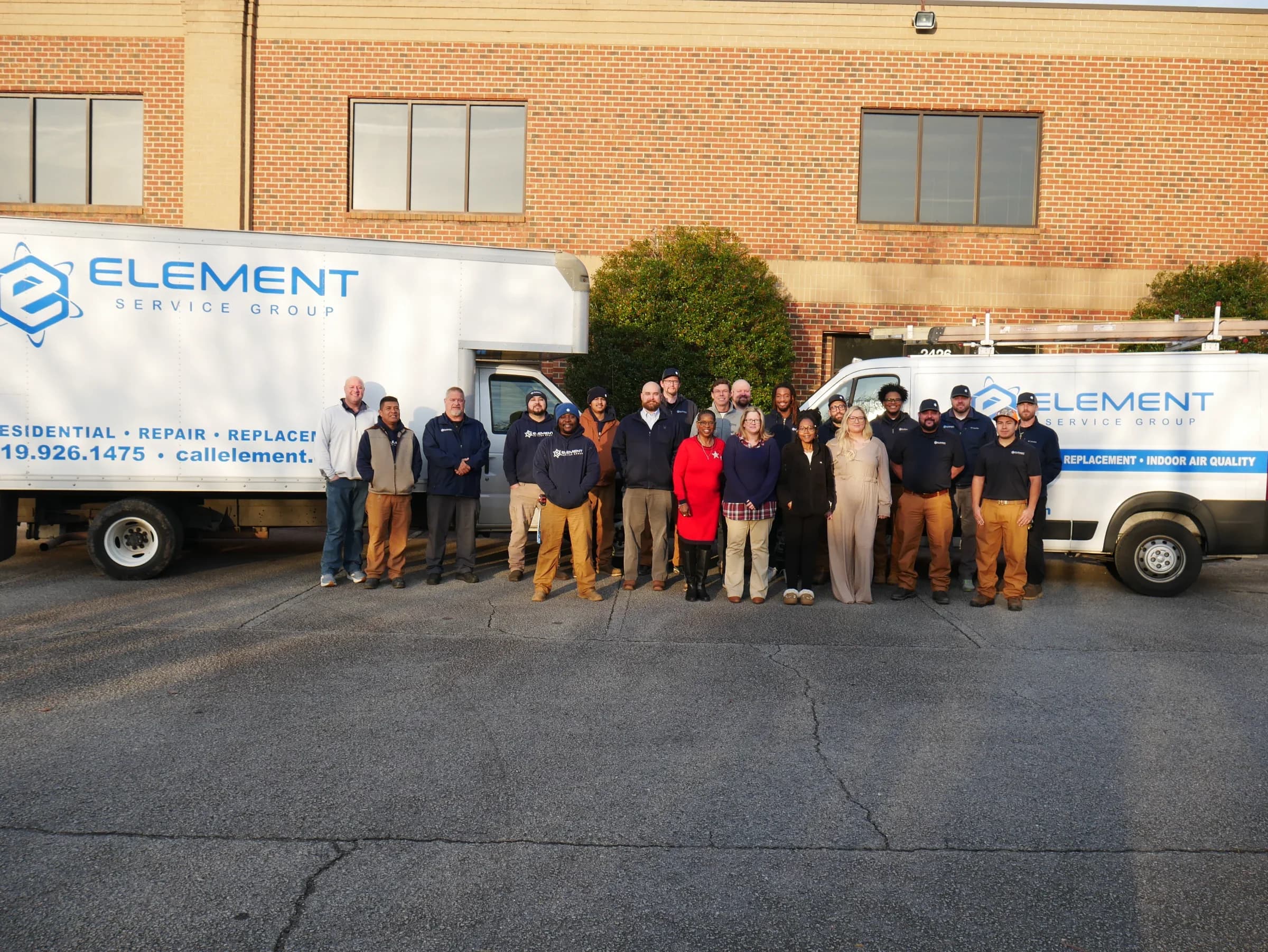
When you call an HVAC company in Apex today, it's no longer a safe assumption that you're calling a locally owned business, even if the trucks have the same name, the same logo, and the same phone number you've called for years.
Over the past few years, several long-established residential HVAC companies in Apex and across the Triangle have been acquired by private equity firms and consolidated into national rollup platforms. Some have been transparent about the change. Many haven't. And for most homeowners, the first sign that anything is different shows up on the invoice.
This isn't an attack on any specific company. Private equity ownership isn't automatically bad, and a lot of acquired HVAC businesses still deliver good service. But the structure of who owns your HVAC company affects what happens on every service call: how technicians are paid, how repair recommendations are written up, who answers when you call with a complaint, and whether the same crew is around next year.
Here's what's actually changing across Apex and the Triangle, what it tends to mean for homeowners, and the questions worth asking the next time you hire an HVAC company in Apex, Cary, Raleigh, Chapel Hill, Durham, Wake Forest, or Fuquay-Varina.
What "locally owned" actually means
A locally owned HVAC company is one where the people making the day-to-day decisions about pricing, hiring, repair-vs-replace recommendations, and customer-service standards live and work in the same community as their customers. The owner picks up the phone if you escalate a complaint. The profits stay in the local economy. The same technician who installed your system may still be working there in five years.
That's distinct from companies that have been acquired by:
- Private equity firms, which typically buy multiple HVAC companies and operate them as a portfolio with central management, standardized pricing playbooks, and quarterly earnings targets
- Publicly traded service conglomerates like Service Experts (owned by Lennox), which run hundreds of locations under various local-sounding brand names
- National franchise networks like One Hour Heating & Air or Aire Serv, which license the brand to local operators but apply national systems and pricing
Some of these companies do excellent work. The point isn't to demonize the structure. It's that the structure is invisible to most homeowners, and it shapes the service you receive in ways that are worth understanding before you sign a contract.
What's been happening in Apex and the Triangle in 2025 and 2026
The HVAC industry has been one of the most active targets for private equity rollups in the United States since around 2018. The reasons are well-documented in coverage from the New York Times, Wall Street Journal, and ProPublica: residential HVAC is recession-resistant, has recurring maintenance revenue, has a fragmented base of family-owned businesses ripe for acquisition, and is largely unregulated at the federal level.
Apex specifically has seen meaningful change. Maynor Service Company, an Apex-based HVAC company founded in 1996, was acquired in September 2025 by Centre Partners and Baldwin Creek Partners to form TruTemp Holdings, a private-equity-backed field services platform. Maynor still operates under its original name from its headquarters on Goodworth Drive, and the acquisition was announced publicly via press release rather than directly to customers.
Other Triangle-area transactions over the past 24 months include expansions by Service Experts (Lennox-owned), regional rollups under names like Wrench Group, and several smaller HVAC and plumbing brands quietly absorbed into national platforms.
This isn't a takedown of any specific company. It's a structural shift that's worth being aware of as a homeowner, because what shows up on your service call in 2026 may not match the company reputation you remember from 2020.
What typically changes after an HVAC company is acquired
These are patterns documented across multiple industries and confirmed by reporting on PE-acquired service companies, not specific claims about any local business. They're worth knowing because they affect your invoice, your warranty experience, and who shows up at your house.
Technicians are more often paid on commission. Many independently owned HVAC companies pay technicians an hourly wage or salary, regardless of what they sell on a service call. After acquisition, technician compensation often shifts to a commission model tied to recommended repair size, replacement upsells, or maintenance plan enrollments. This creates a real incentive question: the person diagnosing your system also profits from recommending more expensive solutions.
Pricing moves from local-market-rate to playbook-based. Independent owners typically price based on what their market will bear and what's fair for repeat customers. PE-acquired companies often standardize pricing across all locations using flat-rate menus designed by central management to maximize average ticket size.
Diagnostic fees become harder to credit toward repair. Independent companies frequently waive or credit the trip/diagnostic fee when the customer authorizes the repair. PE playbooks often keep the diagnostic fee separate to capture revenue whether or not the customer proceeds.
Customer service centralizes. Calls that used to go to a local dispatcher in Apex start routing to a regional call center. Complaints that used to escalate to the owner directly now route through a customer-service script.
Marketing budgets grow significantly. PE-acquired companies typically invest heavily in paid search, billboards, and TV advertising, costs that ultimately flow into service pricing. Independent companies generally rely more on word-of-mouth referrals and local SEO.
Technician retention often drops. When compensation shifts to commission and operational policies tighten, experienced technicians frequently leave. The crew that showed up in 2022 may not be the crew that shows up in 2026.
None of these patterns is universal. Some acquired companies maintain quality and even improve it. But they're worth understanding because none of them is visible from the outside. You only find out after you've signed.
A homeowner checklist for hiring an HVAC company in Apex
These questions work on any HVAC company, anywhere, locally owned or not. The answers will tell you a lot about who you're actually doing business with:
- "Who owns the company today, and how long have they owned it?" Look for a clear, simple answer. If you get a vague response or a holding-company name you've never heard of, that's a signal to dig further.
- "How are your technicians paid? Hourly, salary, or commission?" Commission-pay technicians have an incentive to recommend more expensive solutions. Hourly or salary technicians don't. Both can be honest, but the structure matters.
- "Is the diagnostic fee credited toward the repair if I move forward?" A "yes" here is a strong sign of customer-friendly pricing. A "no" doesn't mean the company is bad, but factor it into your total cost.
- "If I have a complaint, who handles it, and can I speak to the owner directly?" At an independently owned company, this is almost always "yes." At larger operations, escalation paths can be long.
- "Will the same technician come back if there's a follow-up issue?" Continuity matters for warranty work and complicated systems. Companies with high technician turnover can't promise this.
- "Can I see your NC HVAC license number and proof of insurance?" Any legitimate company will provide this without hesitation. NC requires HVAC contractors to be licensed by the State Board of Examiners of Plumbing, Heating, and Fire Sprinkler Contractors.
- "How long has your senior technician been with the company?" Long technician tenure is one of the best predictors of consistent service quality.
You don't need to ask all seven on the first call. But two or three of them, asked politely, will tell you most of what you need to know about how the company operates.
How to verify whether an HVAC company is still locally and independently owned
If you want to confirm the ownership of any HVAC company in Apex, Cary, Raleigh, or anywhere in the Triangle, three free public sources will tell you most of what you need to know:
- North Carolina Secretary of State business filings at sosnc.gov. Search the company name. Recent ownership changes, mergers, and parent-company filings appear here, usually within 60 days of the transaction.
- The company's own press releases or "About" page. Major PE acquisitions are typically announced publicly by the acquiring firm even when the acquired company stays quiet. A Google News search for "[company name] + acquisition" or "[company name] + private equity" will surface most of these.
- The BBB business profile. The BBB usually updates the parent-company designation within a few months of an acquisition.
If a company is owned by a holding company you've never heard of, that's not necessarily a bad sign, but it's worth knowing before you call.
Why we chose to stay independent at Element Service Group
We're an Apex-based, independently owned HVAC company. We've had several conversations with people interested in acquiring or investing in Element Service Group, and we've chosen to stay independent for one reason: every meaningful decision about how we treat customers, including pricing, technician pay, how we handle callbacks, and what we recommend on a service call, is made by people who live in the same community as our customers. We don't have a private equity firm setting quarterly targets.
That doesn't make us automatically better than any company that's gone a different route. It does mean that when something goes wrong, the person responsible is local, reachable, and has their reputation on the line in Apex.
Frequently asked questions
Who currently owns Maynor Service Company?
Maynor Service Company was acquired in September 2025 by Centre Partners (a private equity firm) and Baldwin Creek Partners, who formed TruTemp Holdings as a field services platform. Maynor continues to operate under its original brand name from its Apex headquarters. Source: Centre Partners press release, September 16, 2025.
Is Maynor Service Company still locally owned?
No. Maynor was founded by J. Anthony Maynor in 1996, sold to local operators Brett Chappell and Jake Williamson in 2019, and acquired by Centre Partners and Baldwin Creek Partners in September 2025. The company is now part of TruTemp Holdings, a private-equity-backed national platform.
Is private equity buying HVAC companies?
Yes. Residential HVAC has been one of the most actively consolidated service industries in the U.S. since around 2018. The pattern has been documented extensively by the New York Times, Wall Street Journal, ProPublica, and HVAC trade publications.
Why is private equity attracted to HVAC?
Residential HVAC is recession-resistant, has recurring maintenance revenue, includes a highly fragmented base of family-owned operators that can be acquired and consolidated, and is largely unregulated at the federal level. Acquirers can grow quickly by buying multiple companies and applying standardized pricing and operational playbooks.
Does private equity ownership automatically mean worse service?
No. Many acquired companies continue to deliver high-quality service. The point is that the ownership structure changes incentives, particularly around pricing, technician compensation, and customer service routing, in ways that are invisible from the outside. Asking direct questions before hiring is the best way to understand what you're actually buying.
Is Element Service Group locally owned?
Yes. Element Service Group is independently owned and operated in Apex, North Carolina. We have not been acquired by any private equity firm or national service platform.
Talk to a locally-based HVAC technician in Apex
If you have questions about HVAC service in Apex or the Triangle, or you'd like to talk to a locally-based technician about your system, you can reach our team here or call us directly. We service Apex, Cary, Raleigh, Chapel Hill, Durham, Wake Forest, and Fuquay-Varina. Every decision about your service is still made in Apex.


