Meet Paul Bommer: From Navy Pipefitter to Vice President at Element
In brief
Paul Bommer is Vice President of Element Service Group and has more than 25 years of experience. He enlisted in the U.S. Navy at 17 and served six years out of Naval Station Norfolk as a Hull Technician, first as a pipefitter at SIMA Norfolk and then as a Hull and Mechanical planner for Submarine Squadrons 6 and 8 aboard the USS Emory S. Land. After his honorable discharge in December 1996, he moved to the Raleigh area to work for a pharmaceutical refrigeration equipment manufacturer.

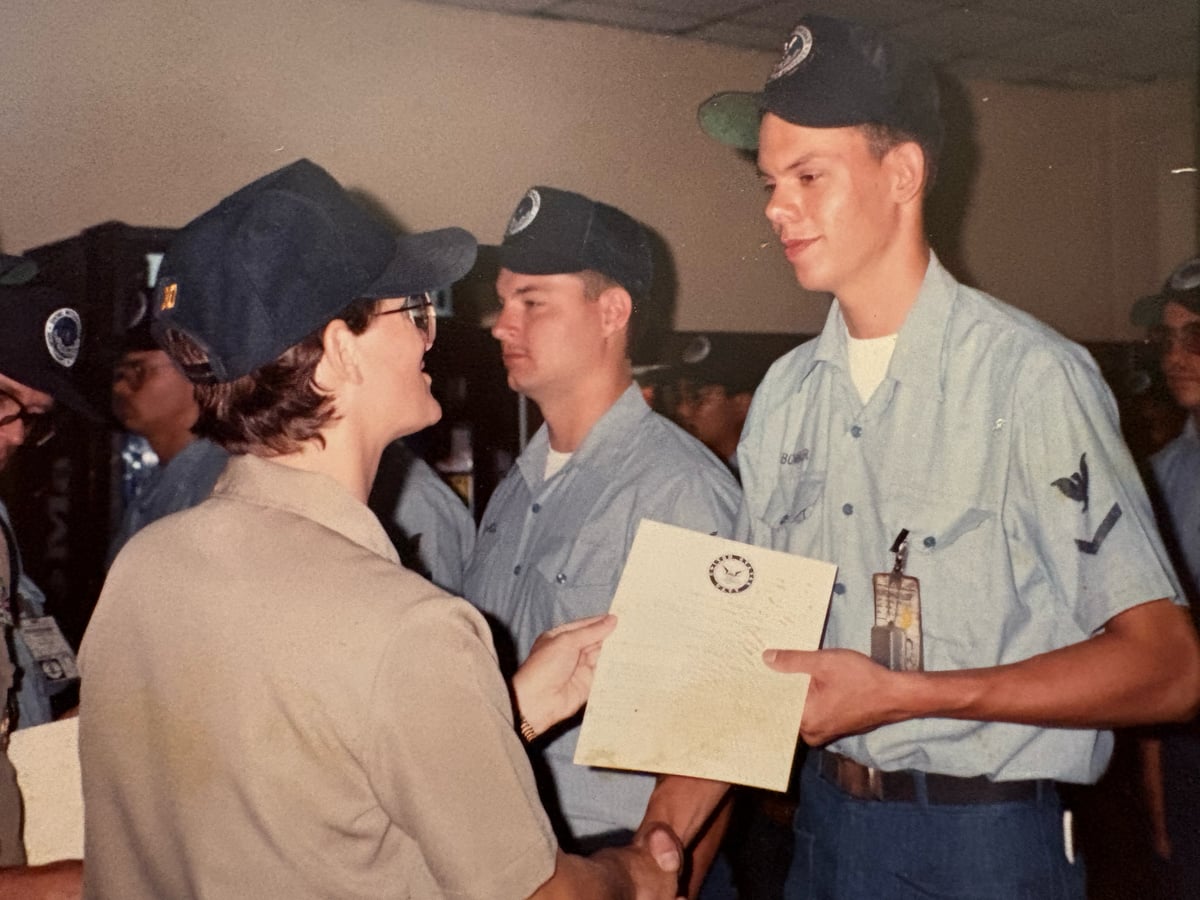
Veterans Day seems like the right time to introduce Paul Bommer. Paul is Vice President of Element Service Group and has more than 25 years of experience. He's also a U.S. Navy veteran, and his six years in the Navy were spent on ship repair, from a World War II era battleship to fast attack submarines. Here's his story, mostly in his own words.
Enlisting at 17
"I enlisted in the Navy at 17 and was stationed out of Naval Station Norfolk, VA for a period of 6 years," Paul says.
His rating, which is the Navy's word for a sailor's job, was Hull Technician. In his words, that "included metal fabrication and firefighting." The Navy's description of the rating today also includes installing and repairing valves, piping, and plumbing fixtures.
A pipefitter on nearly every class of ship
Paul's first assignment was SIMA Norfolk. SIMA stands for Shore Intermediate Maintenance Activity, and it handles the repair work that falls between what a ship's crew does on board and what goes to a shipyard. He worked there as a pipefitter in shop 56A, "where I got to work on nearly every class of surface ship in the US Navy."
The very first ship he worked on was the USS Wisconsin (BB-64), an Iowa class battleship commissioned in 1944. Today it's a museum ship in Norfolk.
He also did repair work on Dutch, German, British, Norwegian, and Russian warships. As Paul puts it: "Yes, you read the Russian part right."
Planning submarine repairs
From SIMA, Paul transferred to the USS Emory S. Land (AS-39), a submarine tender, and became a Hull and Mechanical planner for Submarine Squadrons 6 and 8. The job was planning extensive repairs to 688 Los Angeles class fast attack submarines.
His duties there included "writing technical procedures for the different shops assigned to the repair, researching drawings, ordering materials, and general oversight of the repair work."
From Norfolk to Raleigh
Paul was honorably discharged at the end of his enlistment in December 1996. He then moved to the Raleigh area to work for a pharmaceutical refrigeration equipment manufacturer.
What carries over
Read back through Paul's Navy years and a lot of it lines up with the work that goes into a home HVAC or plumbing job: fitting pipe, planning mechanical repairs, writing procedures for the people doing the work, ordering the right materials, and keeping an eye on a repair until it's finished. Refrigeration, where he went next, is the same principle every air conditioner and heat pump runs on.
The scale is very different, and the steps are familiar: understand the system, plan the work, get the right parts, and check the repair before calling it done.
Thank you to the veterans in your family and across the Triangle.
You can meet Paul and the rest of our team on our About page.


